
First Responders & Military Program at Provive Wellness
First Responders & Military Program at Provive Wellness
Police officers, firefighters, paramedics, EMTs, military veterans, and active service members share something that most people never encounter: their job required them to absorb traumatic events as a condition of showing up. Not once, not occasionally — but as a structural feature of the work. Chronic exposure to death, violence, suffering, and life-threatening situations does not leave the nervous system untouched. It reshapes it. And the cultures of emergency services and military life — built around toughness, competence, and the suppression of vulnerability — make it extraordinarily difficult to seek help before the damage becomes impossible to ignore.
At Provive Wellness, we offer a dedicated program for first responders and military veterans that takes seriously both dimensions of this challenge: the clinical reality of occupational trauma, and the cultural reality of what it costs someone to ask for help. Our First Responders and Military Program is not standard outpatient treatment with a different label. It is a clinically grounded, population-specific approach built around what this community actually faces.
The program is integrated into our Partial Hospitalization Program (PHP) and Intensive Outpatient Program (IOP) at our Wayne, PA and Scranton, PA locations.
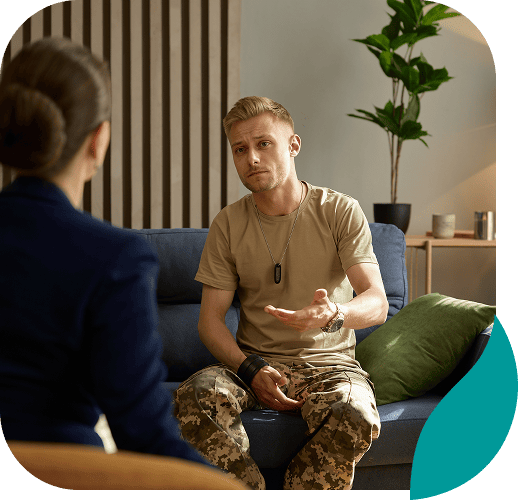
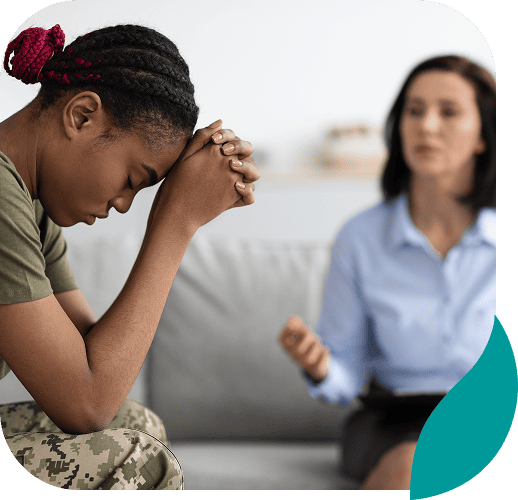
The First Responders & Military Program at Provive addresses:
- Post-Traumatic Stress Disorder (PTSD) — the most prevalent mental health consequence of occupational trauma in first responders and combat veterans
- Cumulative trauma — the compounding effect of repeated exposure to traumatic events over a career, distinct from single-incident PTSD
- Substance use disorder — alcohol and opioid use that begins as coping and becomes dependency, at rates significantly higher than the general population
- Depression, anxiety, and hypervigilance — the nervous system consequences of sustained high-alert functioning
- The culture of silence — the internal and institutional pressure not to appear weak, seek help, or disclose struggle to peers or supervisors
- Identity and purpose in recovery — redefining who you are when the job that defined you is no longer tenable in its current form
- Family impact — how first responder and military stress shapes family dynamics, relationships, and children
The data on mental health and substance use in first responder and military populations is stark and well-documented. According to the Substance Abuse and Mental Health Services Administration, police officers and firefighters are more likely to die by suicide than in the line of duty. The Ruderman Family Foundation’s landmark 2018 report found that police and firefighters die by suicide at rates two to three times higher than in line-of-duty deaths. Among veterans, the VA reports that approximately 30% of Vietnam veterans, 12% of Gulf War veterans, and 11–20% of Iraq and Afghanistan veterans have experienced PTSD in a given year. Rates of alcohol use disorder in active and former military personnel are consistently higher than the general population, with PTSD and SUD frequently co-occurring. A 2020 systematic review in Occupational and Environmental Medicine found that first responders have a 30% higher prevalence of alcohol use disorder than the general population. These are not fringe statistics — they reflect the predictable consequences of a job that demands extraordinary things of ordinary human nervous systems without adequate support.
What makes treating this population clinically distinct is not just the severity of the trauma — it is the context in which it was acquired and the culture in which recovery must happen. First responders and military personnel are trained to suppress physiological fear responses, to present as capable under pressure, and to distrust anything that looks like weakness. This same training that makes them effective at their jobs makes it profoundly difficult to do the vulnerable, uncertain work of therapy. Treatment that does not account for this will lose these clients early. Treatment that understands it — that meets them with directness, evidence, and a peer-informed environment — has a genuine chance of changing lives.
What makes treating this population clinically distinct is not just the severity of the trauma — it is the context in which it was acquired and the culture in which recovery must happen. First responders and military personnel are trained to suppress physiological fear responses, to present as capable under pressure, and to distrust anything that looks like weakness. This same training that makes them effective at their jobs makes it profoundly difficult to do the vulnerable, uncertain work of therapy. Treatment that does not account for this will lose these clients early. Treatment that understands it — that meets them with directness, evidence, and a peer-informed environment — has a genuine chance of changing lives.
What the First Responders & Military Program at Provive looks like:
- Dedicated peer group — sessions with other first responders and veterans, where the cultural shorthand is understood and nothing requires explanation
- Trauma-informed clinical work — evidence-based therapies including CBT and DBT adapted for occupational trauma and PTSD presentations specific to this population
- Individual therapy with clinicians who understand first responder and military culture — not just trauma in the abstract, but the specific dynamics of these professions
- Integration with holistic programming — including somatic therapies shown to be effective for trauma, such as breathwork, equine therapy, and sound healing, alongside clinical work
- Confidential environment — participation is not reported to employers or commanding officers; standard HIPAA protections apply in full
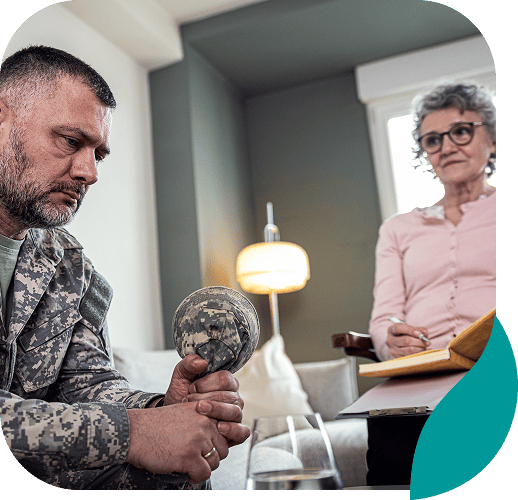
One thing we hear consistently from first responders and veterans who come to Provive is that they waited far too long because they could not imagine a treatment environment that would understand their world. They had seen what happened when people in their profession sought help — the stigma, the career implications, the way it changed how colleagues looked at them. They assumed any therapist would pathologize experiences that were, in their world, simply part of the job. What changes when they arrive at Provive is not the difficulty of the work — recovery is hard regardless — but the experience of being in a room where they do not have to spend half the session explaining the context before getting to the content. That efficiency, that sense of being understood, matters clinically. Trust builds faster. Honesty comes sooner. And the real work begins.
TRICARE, VA CCN and most major insurance plans are accepted. Call us at (610) 947-0800 to begin yours or a loved one’s journey toward recovery — with clinicians who understand what you’ve carried and a program built for people who carry it.
Frequently Asked Questions
No. Your participation in treatment at Provive Wellness is fully protected under HIPAA. We do not contact employers, departments, or commanding officers. Nothing you share in treatment is disclosed without your explicit written consent. Many clients come to us specifically because of this concern — it is one we take seriously and protect absolutely.
No. The program serves active first responders and military personnel as well as veterans and those who have retired or separated. Many clients continue working while in our IOP program, which offers both daytime and evening scheduling.
Many first responders and veterans who come to Provive have had previous treatment experiences that did not account for their specific culture and history. When treatment does not reflect your actual life, it is often less effective — not because you failed to respond, but because the approach was not built for you. A population-specific program changes that.
Call our admissions team at (610) 947-0800 for a current and complete benefits verification. We accept most major insurance plans and can verify your specific coverage at no cost before you make any commitment.
Service & Unity is Provive’s dedicated program for military personnel, veterans, and their families. The First Responders program extends this population-specific approach to include police, fire, EMS, and other emergency service professionals, recognizing that both communities face occupational trauma and help-seeking stigma in overlapping but distinct ways. Your clinical team can help determine which program or combination of programs is the best fit.
The First Responders and Military Program is integrated into Provive’s PHP and IOP programming, which most major insurance plans cover. Call (610) 947-0800 for a confidential benefits verification at no cost.
The Provive Difference

PERSONALIZED CARE
Innovative treatment tailored to you. Our experts embrace the latest in evidence-based practices to help patients get results.

SUPPORTIVE STAFF
You’re not alone. Our staff understands the challenges of overcoming addiction and provides support at every step.

HOLISTIC APPROACH
Physical health is just one piece of the puzzle. We help patients achieve optimal wellness in mind, body, and spirit.
Some Insurance Plans we work with include:


The journey to wellness starts with a single step
Contact our team to learn more about the programs and resources available at our Wayne and Scranton locations.


