
Men's & Women's Groups at Provive Wellness
Men's & Women's Groups at Provive Wellness
There are things people say in a room of only men that they would not say with women present. There are things women name, when speaking only with other women, that they could not have reached in a mixed group. This is not about exclusion — it is about what becomes speakable when certain social pressures are removed. Gender shapes how people experience addiction and mental health. It shapes how they were hurt. It shapes how shame operates. It shapes what they believe they are allowed to feel. Gender-specific group therapy creates a space where those dynamics can be addressed directly, without the additional layer of navigating cross-gender dynamics in a room where vulnerability already costs something.
At Provive Wellness, Men’s and Women’s Groups are dedicated clinical spaces within our broader treatment program — peer groups in which gender-specific patterns, trauma histories, and relational dynamics can be explored with a depth that mixed-gender groups cannot always reach. They are not a replacement for individual therapy or evidence-based group work. They are a complement to it: a space where the specific experiences that tend to be most guarded can be brought into the room without the additional task of translating them for a mixed audience.
Men’s and Women’s Groups are integrated into our Partial Hospitalization Program (PHP) and Intensive Outpatient Program (IOP) at our Wayne, PA and Scranton, PA locations.
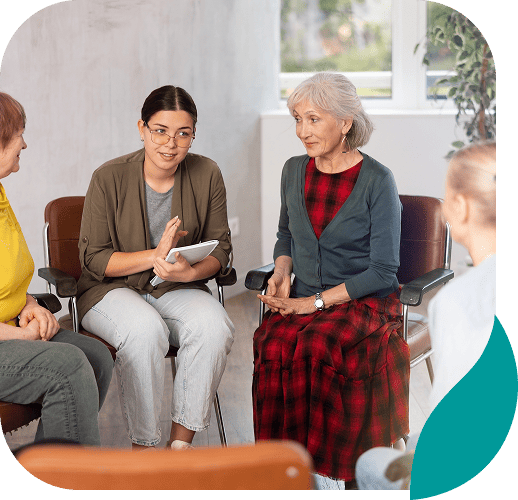

What Men's and Women's Groups address:
- Gender-specific trauma — including sexual abuse, domestic violence, combat trauma, and the forms of harm that are disproportionately experienced by each gender and carry distinct patterns of shame and silence
- Socialized patterns of suppression — for men, the long-standing cultural prohibition on emotional expression and help-seeking; for women, the ways that relational caretaking and self-silencing can sustain both trauma and addiction
- Shame and identity — how gender socialization shapes the specific content of shame in addiction and mental health, and the specific obstacles to self-compassion and recovery
- Relationship patterns — the dynamics of intimacy, dependency, and interpersonal conflict that often underlie substance use and are most productively explored with others who share similar relational histories
- Body image and self-worth — the gender-specific dimensions of how people relate to their own bodies, particularly in the context of trauma, eating patterns, and substance use
- Parenting and family roles — the pressures, grief, and identity questions that arise for parents navigating addiction and recovery, often with different weight depending on gender
The clinical literature on gender-specific treatment has grown substantially over the past two decades. A comprehensive review published in Substance Abuse Treatment, Prevention, and Policy found that women who received gender-specific addiction treatment had significantly higher completion rates and better substance use outcomes than those in mixed-gender treatment. Researchers note that women’s treatment tends to benefit especially from attention to co-occurring trauma, relationship functioning, and the caregiving roles that create unique barriers to engagement. For men, the picture is distinct but equally well-documented: a 2021 review in the Journal of Substance Abuse Treatment found that men’s addiction is more frequently marked by externalizing behaviors, suppressed help-seeking, and a cultural context in which emotional expression is actively discouraged. Men who feel licensed to be honest about emotional pain — in a room of other men who share that license — engage more deeply and progress further in treatment. The research converges on a straightforward principle: when treatment reflects the actual gender-specific context of a person’s experience, they do better.
The Men’s Group at Provive is built around the understanding that many men arrive in treatment having spent years performing a version of strength that was actually keeping them sick. The cultural messages about what men are supposed to feel, need, and tolerate are not benign — they are clinical risk factors. The group creates a specific kind of permission: to be struggling, to be uncertain, to ask for help, in the presence of other men who understand exactly what that costs and are doing it anyway. That permission is not soft. It is one of the most clinically powerful things we offer.
- The group gathers with a licensed art therapy facilitator
- A structured prompt or theme is introduced — often connected to the clinical work of the week
- Participants work with provided materials (paint, collage, drawing tools, clay) at their own pace
- The session closes with guided reflection — sharing what came up and what was noticed
- Insights are integrated back into individual therapy and group treatment
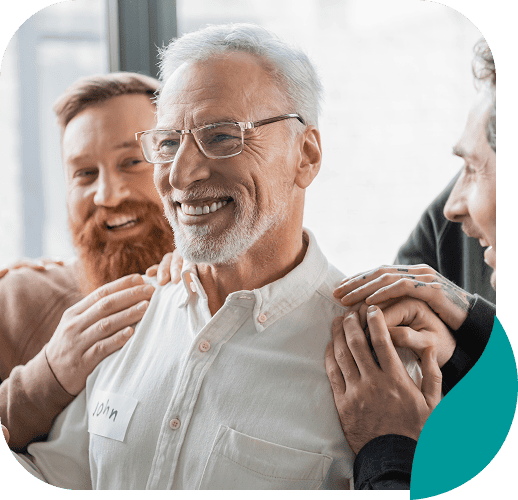
The Women’s Group at Provive is built around the understanding that women often arrive having spent years organizing their lives around others’ needs at the expense of their own. The relational patterns that underlie addiction in women — people-pleasing, silencing of anger, difficulty with boundaries, the aftermath of interpersonal trauma — are best addressed in a space that understands them not as individual failures but as the predictable consequences of how women are socialized and, too often, harmed. The group is a space to name what happened, to stop managing others’ reactions to it, and to begin the work of building a self that recovery can actually inhabit.
Both groups are facilitated by clinicians with specific training in gender-informed care, and both are held within the broader clinical structure of Provive’s PHP and IOP programming — which means they work in direct coordination with individual therapy, evidence-based group work, and holistic programming. The goal is not a separate track but a deeper dimension of the same track: one that reaches what mixed-gender environments sometimes cannot.
Call us at (610) 947-0800 to begin yours or a loved one’s journey toward recovery in a program with space for everything you’ve been carrying — including what you’ve never been able to say out loud.
Frequently Asked Questions
Men’s and Women’s Groups are open to clients in Provive’s PHP and IOP programs who identify as men or women, respectively. Your clinical team will discuss which specialty groups are the best fit for your individual treatment goals and schedule.
Your clinical team will work with you individually to determine which group or combination of groups best serves your needs. The goal is always clinical fit — what environment allows you to do your best work. Transgender men and women are welcome in the groups consistent with their gender identity. Nonbinary clients may benefit from one or both groups, or may be best served by another specialty program such as the LGBTQ+ Program, depending on your specific history and clinical goals.
Yes. All group therapy at Provive Wellness operates under standard confidentiality protections, and group members agree to confidentiality as a condition of participation. Gender-specific groups are often experienced as particularly confidential environments because the shared context reduces the experience of being judged and increases the experience of being understood.
The differences are clinical, not cosmetic. Men’s groups tend to focus more on breaking down the cultural barriers to emotional honesty, processing externalizing behaviors like anger and avoidance, and building language for internal experiences that men are often taught not to have. Women’s groups tend to address relational and caregiving patterns, the aftermath of interpersonal trauma, self-silencing, and the intersection of trauma and substance use in ways that are particularly common among women. Both groups are facilitated by clinicians with training in gender-informed care.
Specialty groups including Men’s and Women’s Groups are offered as part of your overall treatment schedule based on clinical appropriateness. Your treatment team will help identify which groups serve your goals. Nothing is mandatory that does not fit your individual plan.
Men’s and Women’s Groups are integrated into Provive’s PHP and IOP programming, which most major insurance plans cover. Call (610) 947-0800 for a confidential benefits verification at no cost.
The Provive Difference

PERSONALIZED CARE
Innovative treatment tailored to you. Our experts embrace the latest in evidence-based practices to help patients get results.

SUPPORTIVE STAFF
You’re not alone. Our staff understands the challenges of overcoming addiction and provides support at every step.

HOLISTIC APPROACH
Physical health is just one piece of the puzzle. We help patients achieve optimal wellness in mind, body, and spirit.
Some Insurance Plans we work with include:


The journey to wellness starts with a single step
Contact our team to learn more about the programs and resources available at our Wayne and Scranton locations.


